
Muhammad Hanifa Khairurahman
Official updates from the PromptAura team.
Articles by Muhammad Hanifa Khairurahman

Uber Just Showed Every Profession How to Fight the Automation Timeline
The first big case study of an incumbent using regulation to slow AI displacement from the inside, and what knowledge workers should copy from it.

The Best Medical AI Doesn't Replace Doctors — It Reads the Tests They Already Ordered
Imperial College's ECG model flags hidden heart disease in tests clinicians already order, for near-zero marginal cost. Here's how to read the honest numbers behind the headlines — and why triage, not diagnosis, is medical AI's real wedge.

One Video Is the New Robot Training Manual
Skild's S1 robot model learns unseen 10-minute tasks from a single video with no fine-tuning — and drops the cost of onboarding a robot task toward the cost of a phone clip.

Your CMO Thinks AI Is Working. Your Team Disagrees.
Jasper surveyed 1,400 marketers: 91% now use AI, but ROI confidence fell to 41% and the CMO-vs-team confidence gap is 61% vs 12%. The problem in 2026 isn't adoption, it's governance and measurement.

Stop Prompt-Praying: Atlas Puts You in the Director's Chair
World Labs' Atlas replaces prompt roulette with actual camera control: one model generating video, 3D scenes, and bullet-time from a handful of phone photos. Here's what that changes for marketing teams.

When the Mockup Becomes the Product: Runway's Solaris and the End of Design-to-Code
Runway's Solaris renders interfaces as live video with no code behind them. What that means for the design-to-code budget, CRO, and web analytics.

Analyze 90-Minute Videos for a Third of the Cost: Gemini's Agentic Video Mode
Google's agentic video understanding cuts token use by up to 88% and cost by up to 66% on long-form video analysis. Here is what that changes for content teams, and how to switch it on today.

750 Tokens a Second: Speed Is Deciding Which AI Agents Survive
OpenAI and Cerebras previewed an 11x-faster API tier this week, and Google and Nvidia shipped speed-focused releases the same week. Why latency now decides which AI agents are usable in production, and how to evaluate it before your next tool purchase.

AI agents now hold their own wallets. The 3D body is the least interesting part
An open-source stack released Aug 29 gives AI agents a 3D body, persistent memory, and their own on-chain wallets that pay other agents in USDC per call. Here's what's real, what's checkable, and why the wallet matters more than the avatar.
Claudeforce and the Default Model Wars
Salesforce and Anthropic shipped a 37-skill sales plugin, but the real news is Claude becoming the default model in Slack. Distribution, not benchmarks, decides who wins.

The Cost of Listening Just Collapsed
IBM's Granite Speech 5.0 Turbo CTC transcribes 3.5 hours of audio per second of GPU compute. Here's what near-free transcription does to voice agents, podcast search, and meeting notes.

How to Stop Renting AI: The Thomson Reuters $40M Playbook
Thomson Reuters spent $40M building its own legal AI on Qwen — and the latest training run cost just $450k. The build-vs-rent math for content businesses has flipped.

Better Prompts Won't Fix Your AI Slop. Governance Will.
Forrester says 68% of buyers distrust AI-made content. Jasper's new governance framework explains why better prompting can't fix that — and what to build instead.

Higgsfield Faceless Studio: The Channel Factory Has a Memory Now
Higgsfield's Faceless Studio turns a channel description into finished five-minute faceless YouTube episodes in about 30 minutes. The real feature is channel memory. Here's the credit math and the monetization fine print.

Google's 'Preferred Sources' Button: The New SEO Is Getting Readers to Vouch for You
Google's new embeddable Preferred Sources button lets readers vouch for your publication inside AI Overviews and AI Mode. Here's where to put it, how to explain it, and why ignoring it isn't a strategy.

Your Content Archive Is a Video Pipeline. Reddit Just Proved It.
Reddit is testing AI voices that turn threads into short video. The same move works on any brand's forum, FAQ, or review archive — here's how to run it.

Stripe Bought the Meter: What the $7B OpenRouter Deal Means for Your AI Bill
Stripe's $7B acquisition of OpenRouter makes token routing a billing business. What it means for anyone paying for AI features, and what to check in your stack now.

OpenAI's Trillion-Dollar IPO Is Weeks Away. Here's What It Changes for the Tools You Pay For
OpenAI's trillion-dollar September IPO will put quarterly profit pressure on a company that has never priced for it. Here's what that means for the AI tools you pay for, and what to do before the listing.

The $700M AI Video Revolution: Why Enterprises Are Abandoning Agencies for AI
The enterprise video landscape just flipped from agencies to AI. Higgsfield went from $20M to $700M in a year as Fortune 500 brands abandoned traditional production for AI's speed, scale, and integration.

The $1.33 Agent: A Field Guide to GPT-5.6 Small-Model Economics
GPT-5.6's small models match flagship benchmarks at a fraction of the cost. The routing playbook for teams running agents in production.

The Post-Training Era: Three AI Upgrades That Prove Bigger Isn't Better
Grok 4.6, Gemini 3.7 Flash, and DeepSeek V4-Pro all shipped this week without new base models. The performance gains came entirely from better post-training — and that tells you where model development is actually heading.

The AI-Native Finance Playbook: 5 Lessons From OpenAI's CFO
OpenAI's finance team is chasing a zero-day close with AI. Sarah Friar published the playbook. Here are the five lessons worth stealing, including the one about model costs that most teams get backwards.

A 30B Agentic Model That Runs on Your Laptop — And It's Free
Meta's Muse Glimmer is a 30B open-weight model that runs agentic workflows — coding, document analysis, tool use — entirely offline on a single consumer GPU. Apache 2.0, distilled from their closed frontier model.

AI Made Content Free. Trust Is What's Left to Sell.
When every brand has AI writing for them, volume stops being an advantage. Joe Pulizzi's Trust Portfolio framework explains why trust is now the scarce resource that compounds.

A 13-Billion-Parameter Model Just Beat Its Own Big Brother. Here's Why That Matters.
DeepSeek's V4-Flash-0731 activates only 13B parameters per token but outscored its own flagship V4-Pro on independent benchmarks. Here's the training recipe that made it happen, and what it means for your inference costs.

Eight Megabytes. All of Wikipedia. Seven Minutes on a Laptop.
Lattice is a static embedding model that scores 0.4749 on BEIR, compresses to 7.94 MB, and embeds all 6.4 million Wikipedia articles in 7 minutes on a laptop. Here is what that changes for retrieval pipelines.

Your AI coding assistant is writing insecure code. Here's how to cut the risk in half
Stanford's SecureForge cuts LLM-generated code vulnerabilities from 20.1% to 11.8% purely through system prompt optimization. No model change needed, open source, deployable today.

A billion people stopped asking ChatGPT questions and started giving it work
OpenAI's first country-level usage dataset shows ChatGPT users have shifted from asking questions to producing work — with implications for retention, reliability, and strategy.

Meta enters the terminal coding agent race with Muse Code
Meta shipped Muse Code, a terminal coding agent with crash-recovery via append-only event log, persistent background agents, and a contributor tier priced 10x cheaper than standard API rates. Here's how it compares to Claude Code and Codex CLI.
The EU just made AI content labels mandatory. Here's what your brand needs to do.
The EU AI Act's transparency rules are now enforceable. Here's what marketers and content teams need to do about AI content labeling — and why acting this week matters.
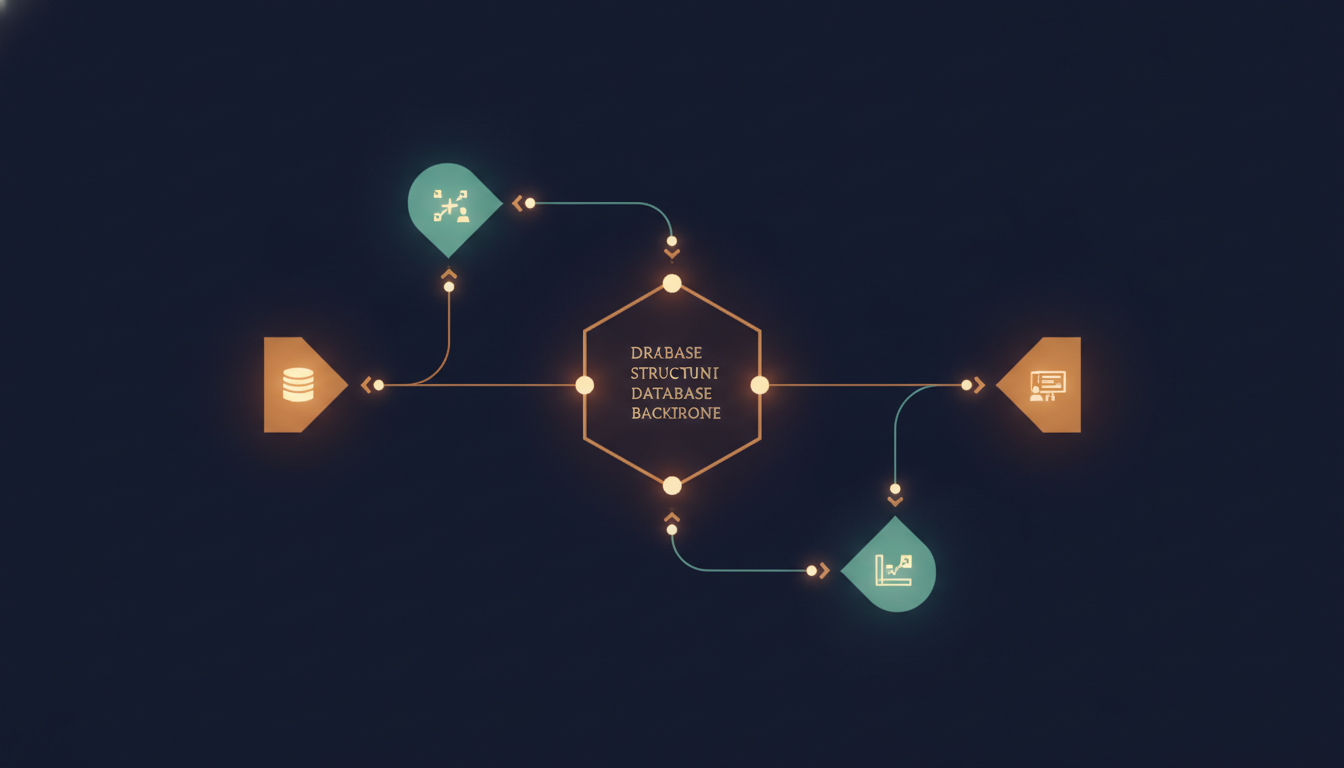
Y Combinator Open-Sources QM: A Company-Wide Multi-Agent Harness You Can Actually Deploy
YC just released the internal tool it uses to run accounting, legal, events, and engineering. It's MIT-licensed, deploys to your own infrastructure, and assumes your company has departments, policies, and shared projects. Here's what it does and how it compares to existing agent harnesses.

The AI Security Paradox: Guardrails Block the Defenders Who Need Them Most
Andrew Ng's team wanted a security audit. Claude and GPT refused. Open models completed it. The most capable models for finding vulnerabilities are the ones whose guardrails prevent defensive use.

Stop Pricing AI by the Token. Price It by the Outcome
OpenAI's pricing strategy reveals the metric teams should actually track: cost per successful outcome, not cost per token. Here is how to build an outcome-cost model.

When the AI Writes the Code, Your Real Job Begins
OpenAI tested coding agents on eight real scientific computing projects. The result reveals a role shift every knowledge worker needs to understand: from builder to reviewer, from creator to quality gate.

Your Job Description Is Obsolete. Here's What's Replacing It.
OpenAI's task crossover research shows 43.5% of work-related AI use involves tasks from outside your occupation. Your role is dissolving into adjacent skills — here's how to steer it.

Your Next AI App Might Not Need the Cloud — POCKET 35B Proves It
A 35-billion-parameter sparse MoE model that runs on iPhones and GPU-less PCs at 20 tokens per second. We break down why sparse Mixture-of-Experts finally makes on-device AI viable, what it means for privacy and cost, and which product features you should move local first.

Two AI Stacks Are Forming. Apple Just Showed Which One Wins in China.
Apple running Alibaba Qwen in China signals AI is splitting into two stacks where market access beats model quality. Combined with production-ready on-device models, here's the framework for routing workloads in 2026.

The Death of the "Singapore Strategy": What Meta's Blocked Manus Deal Means for AI Startups
The blockade of Meta's .5B acquisition of Manus signals the end of geopolitical arbitrage for AI founders. Here is why the 'Singapore Strategy' is dead and how to survive the bifurcation of AI.

GEO Is the New SEO: How to Audit and Win Your Brand's Visibility in AI Answer Engines
GEO (Generative Engine Optimization) is the new SEO. Learn how to audit your brand's visibility across ChatGPT, Claude, and Gemini, close citation gaps, and build a systematic GEO workflow that compounds with every model retraining cycle.

Embodied AI Just Walked Out of the Lab: The 6 Demos From WAIC 2026 That Prove Robots Are Shipping
From a 20-DoF robotic hand folding balloon dogs to a 38kg-payload humanoid with 24/7 battery swaps, WAIC 2026 proved embodied AI has moved from research demos to product spec sheets. Here are the six demos that matter.

The 35-Second Competitive Analysis: How to Run SWOT With AI in 2026
A $10,000 competitive analysis in 35 seconds. Here's the exact workflow — prompt, two-model cross-check, and the verification step most teams skip.

Every Major AI Lab Failed Safety Class in 2026 — Here's How to Pick a Vendor Anyway
The 2026 AI Safety Index graded every frontier lab and nobody passed. Anthropic led with a C+. Here's a practical framework for evaluating AI safety when choosing a model provider.

The Search Era Is Over
Perplexity rebuilt itself from an answer engine into a full autonomous agent suite orchestrating 20 models across desktop, mobile, and enterprise. Here is how it stacks up against ChatGPT Work, Copilot, and Gemini Enterprise — and what to pilot first.

The $1 Trillion AI Bubble Warning Founders Can't Ignore — And What to Do About It
The Bank for International Settlements warns $1T+ in AI capex sits on shaky financing. Here's what founders and operators must do differently this week — route for cost per job, not per token; gate autonomous agents like junior employees; and exploit the headline-vs-reality gap before competitors overcommit.

The End of the Chatbot Era: Why Persistent Agents Like Project Arc Are the Future of Enterprise AI
NVIDIA and ServiceNow launched Project Arc — a persistent, self-evolving desktop agent that remembers your workflows across days. Here is why stateless chatbots are dead and which jobs change first.

The 35-Second Competitive Analysis: How to Run a $10K SWOT With AI
A competitive analysis that used to cost $10,000 and take weeks can now be generated in 35 seconds. Here is the exact prompt, the multi-model workflow, and a verification framework you can use today.

I Tested 6 AI Ad Generators — Here's What Actually Works for Marketers in 2026
A hands-on comparison of six AI ad generation platforms in 2026 — Higgsfield, Creatify, Arcads, HeyGen, Pika, and Canva — breaking down costs, use cases, and which tool wins for each marketing scenario.

How Deutsche Telekom Rewired a 200,000-Person Telco to Be AI-Native (And the 3-Phase Playbook You Can Steal)
Deutsche Telekom didn't just adopt AI—they rewired their operating model in three phases. 50K+ employees on ChatGPT Enterprise, 546% usage growth, and a CPDO who says AI-native means redesigning work itself. Here's the playbook.

What OpenAI's Government Playbook Means for Your AI Stack (And Why Compliance Is About to Become a Competitive Advantage)
OpenAI published National Security Principles and launched the Daybreak cyber defense program with 12+ allied governments. Here is why that makes OpenAI the most compliance-ready AI provider — and what it means for your procurement decisions.

The Talent Wars Are Getting Ugly: What Apple vs. OpenAI Means for Every AI-Curious Marketer
When Apple sues OpenAI for allegedly stealing hardware secrets through a 400-person poaching spree, it signals that AI talent mobility rules are being rewritten. Here's what marketers and creators need to understand about the corporate dynamics shaping your tools.