Uber spent a decade fighting driver unions. This month, according to the Financial Times, the company is lobbying alongside them.
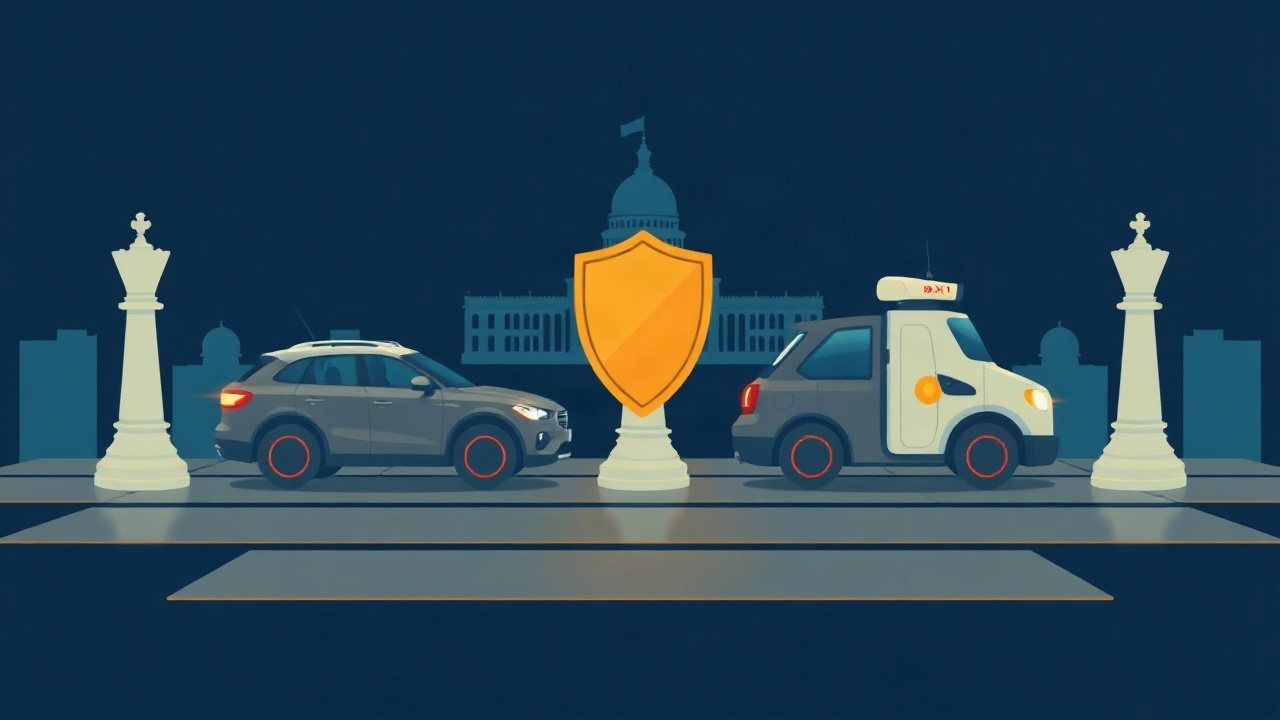
The reversal is so abrupt it looks like a typo. Uber built its business model on classifying drivers as independent contractors and beating back union drives city by city. Now it’s pushing proposals like an 85% human-driver quota in New Jersey and a hybrid-network rule in Washington, DC, all to keep humans in the network as autonomous fleets expand. The company that fought labor is now funding it, because labor’s preferred regulations happen to slow the robots coming for Uber’s own market.
If you work in content, marketing, consulting, or any knowledge profession watching agentic AI approach your revenue, this is the most useful news story of the month. The reason isn’t ride-hailing. It’s that this is the first large-scale case study of an incumbent using regulation to manage AI displacement from the inside.
What Uber actually did
Strip away the irony and the moves are concrete. Per the FT report and TechCrunch coverage:
- Uber is co-lobbying with driver unions for human-driver protections it would have opposed outright five years ago, including the 85% New Jersey quota and the DC hybrid-network rule.
- Uber’s own internal estimate puts displacement at roughly one autonomous vehicle replacing four drivers. That number is doing a lot of work in this story.
- The same week, Uber announced layoffs affecting about 10% of staff — roughly 3,300 roles.
Read those three together. Uber is managing the autonomous-vehicle transition from both ends: shrinking its own payroll while legally preserving the human supply its network and its regulator relationships depend on. The FT reads the union alliance as tactical, aimed at slowing Waymo-style fleet expansion in Uber’s markets. I’d go further — it’s a company buying time it doesn’t otherwise have.
The Pattern Behind the News
There’s a template here, and it’s older than AI. When a disruptive technology threatens an incumbent, the incumbent’s cheapest weapon is regulation. Taxi medallion owners used it against Uber itself. Hotel associations used it against Airbnb. Broadcasters used it against streaming.
What’s new is who’s pulling the trigger. Uber was the disruptor. Now that the disruption curve has turned to face it, it’s reaching for the same political machinery it spent years resisting, and allying with the unions it defeated because they want the same slowdown it does.
The uncomfortable implication for everyone else: the political machinery works. Not permanently, and not completely. But it can move the timeline, and moving the timeline has real economic value when you’re the one about to be displaced.
Why knowledge workers should care
Here’s the part that matters for this audience. Agentic AI is moving toward exactly the kind of work PromptAura readers do: research, drafting, campaign management, analysis, code. The standard advice has been some version of “learn the tools, stay adaptable.” Fine as far as it goes. It ignores the third lever.
When automation threatens a profession, that profession has three moves. Adapt, which everyone talks about. Differentiate into judgment and relationship work, which the adapt crowd eventually discovers. And organize, which almost nobody in knowledge work discusses seriously.
Uber just demonstrated move three at scale. The professions that figure out how to use it — through licensing regimes, liability rules, disclosure requirements, procurement standards, data-provenance mandates — will have years more runway than the ones relying on individual adaptability alone.
What to do now
If you advise businesses or build a career in the AI-transition economy, three things are worth doing this month:
Map your regulatory surface. List every rule that already constrains how work gets done in your field — licensing, liability, insurance, disclosure, data handling. Every one is a potential buffer against full automation, because autonomous systems have to satisfy them too.
Watch the displacement math. Uber’s one-vehicle-to-four-drivers ratio is the kind of number every industry produces eventually. When credible estimates of your profession’s ratio appear, the urgency of moves one and three changes. Track them like you’d track a competitor’s pricing.
Take the organizational lever seriously. This means joining the industry bodies that will actually negotiate the transition — bar associations, marketing councils, guilds, professional societies. Not for networking. Because the Uber playbook runs through institutions, and institutions negotiate with members, not lone individuals.
The sober read
There’s a version of this story where the slowdown fails and the quotas just make rides more expensive in New Jersey. Regulation buys time; it rarely stops the underlying economics. Uber’s own layoff announcement is the tell. The company is hedging both directions because it doesn’t know which way this breaks either.
But buying time is not nothing. Time is retraining budgets. Time is a softer landing for the displaced. Time is the difference between an industry that manages a transition and one that gets managed by it. Uber, of all companies, just priced that time as worth its reputation.
The next few years will produce dozens of versions of this story in other industries. The professions that recognize the playbook early, and the ones that still have functioning institutions to run it, will be the case studies. The rest will be the footnote.