OpenAI is weeks from potentially the largest tech IPO in history, and almost nobody is talking about what it does to the software you pay for every day. The confidential S-1 went to the SEC on May 22. Goldman Sachs and Morgan Stanley are running the book. Reported valuations run from $852 billion to over a trillion, with listing targeted as early as September 2026.
Here is the number pair that should interest anyone paying for AI tools: OpenAI pulls in roughly $2 billion a month (about $25 billion annualized) and is still expected to lose around $14 billion this year.
Those two facts are about to start mattering to you quarterly.
Why a public OpenAI behaves differently
A private company burns cash quietly. A public one burns it in front of analysts every ninety days, with a stock price attached.
OpenAI has never had to optimize for profit. It optimized for growth: users, agents, API volume, enterprise deals. That strategy built the most recognizable brand in AI, and the losses were somebody else’s problem, absorbed by investors who accepted the burn as the cost of owning “the layer AI runs through.”
Once listed, the incentive structure flips. Reuters reported the mechanism before the paperwork did: revenue has to start catching the cost curve. When a company that has never priced for profit needs to narrow a $14 billion gap, the moves are predictable. Price increases. Ads, already in testing inside ChatGPT. And a harder enterprise push, because that’s where the margin lives.
None of this is a complaint about OpenAI. It’s just what going public means. The same pressure that made every other subscribed software more expensive over time arrives at the fastest-growing software company in history.
The A/B test running alongside it
The timing is almost comedic. Days before OpenAI’s IPO window opened, Calcalist reported that Anthropic recorded its first profitable quarter: about $559 million in operating profit on $10.9 billion in Q2 revenue, with revenue more than doubling from the prior quarter.
Caveat worth stating plainly: those are reported figures, not audited filings. The real numbers arrive with Anthropic’s own IPO paperwork. A confidential Nasdaq prospectus is already filed, with publication delayed, reportedly partly because of acquisition talks with the Israeli startup Decart at around a $7 billion valuation.
But if the figures hold, the market gets something rare: two labs, same quarter, opposite philosophies. OpenAI grows at any cost and loses $14 billion a year. Anthropic cut inference costs while sales climbed, and flipped the sign. Two IPOs, months apart. Investors vote on which model of AI economics they believe, and the rest of us get to watch the scoreboard in real time.
The $105 billion backdrop
One more filing from this week explains where the money goes. CNBC reported that Nvidia will finance up to $105 billion for a new AI data center in Ohio that OpenAI will lease, supporting an initial 4.25 gigawatts of compute. The Information had the deal at “roughly $100 billion” last week; the final filing came in higher.
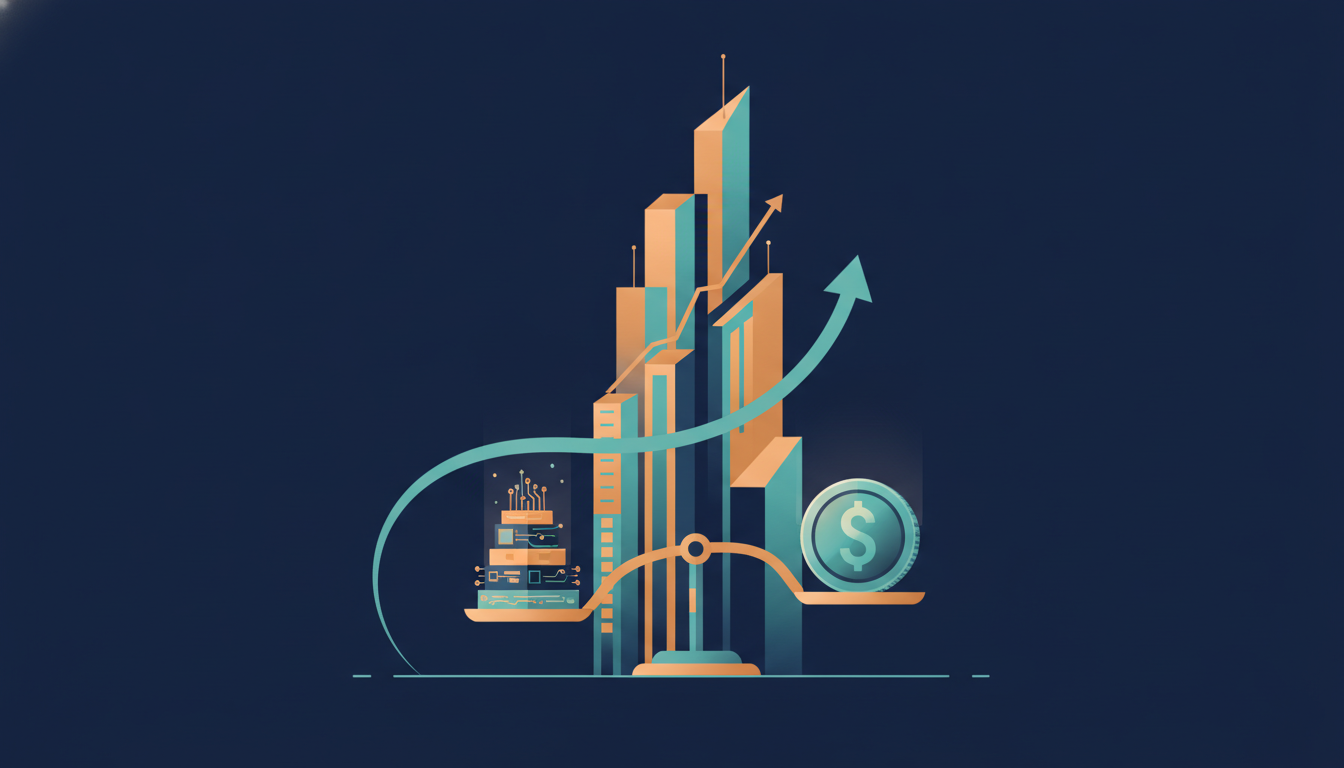
Nvidia has stopped being a supplier and started being the bank. And the loop is circular: Nvidia guarantees the financing, the data center buys Nvidia GPUs, GPU revenue lets OpenAI pay Nvidia back. It holds together as long as AI demand keeps climbing — which is exactly the assumption a trillion-dollar IPO asks public investors to underwrite.
For builders on OpenAI’s stack, the practical read is optimistic: capacity constraints have throttled product launches all year, and this is checkbook-scale aggression aimed at that exact problem. For everyone else, remember that compute is the line item behind every AI subscription price you pay. When the financing gets this big, pricing follows.
What to actually do now
Audit your AI spend this month. List every subscription and API line item. If OpenAI raises consumer prices post-IPO — the standard playbook within two quarters of listing — you want to know what you were paying before, not after.
Watch the September prospectus for three things: the loss trajectory, the ad revenue plans for ChatGPT, and any enterprise pricing changes. Those three lines tell you where your costs go next.
If you build on the API, add an abstraction layer. Model endpoints keep dying — Google killed every Imagen 4 endpoint this week, handing developers a hard error instead of a warning. The market already priced this lesson: Stripe just paid over $7 billion for OpenRouter, whose entire product is routing around single-vendor dependency. If your product calls one vendor’s model directly, that risk is yours to carry.
Don’t panic-switch vendors over ideology. The Anthropic numbers are unaudited and the OpenAI loss is an estimate. Both companies could be right about their own strategy. Pick tools on fit and price, not on which IPO you’d rather root for.
The interesting part starts the first Thursday after listing, when OpenAI has to explain its burn rate to analysts on a live call. Everything before that is speculation. Everything after it is a quarterly rhythm — and your invoice is part of it.