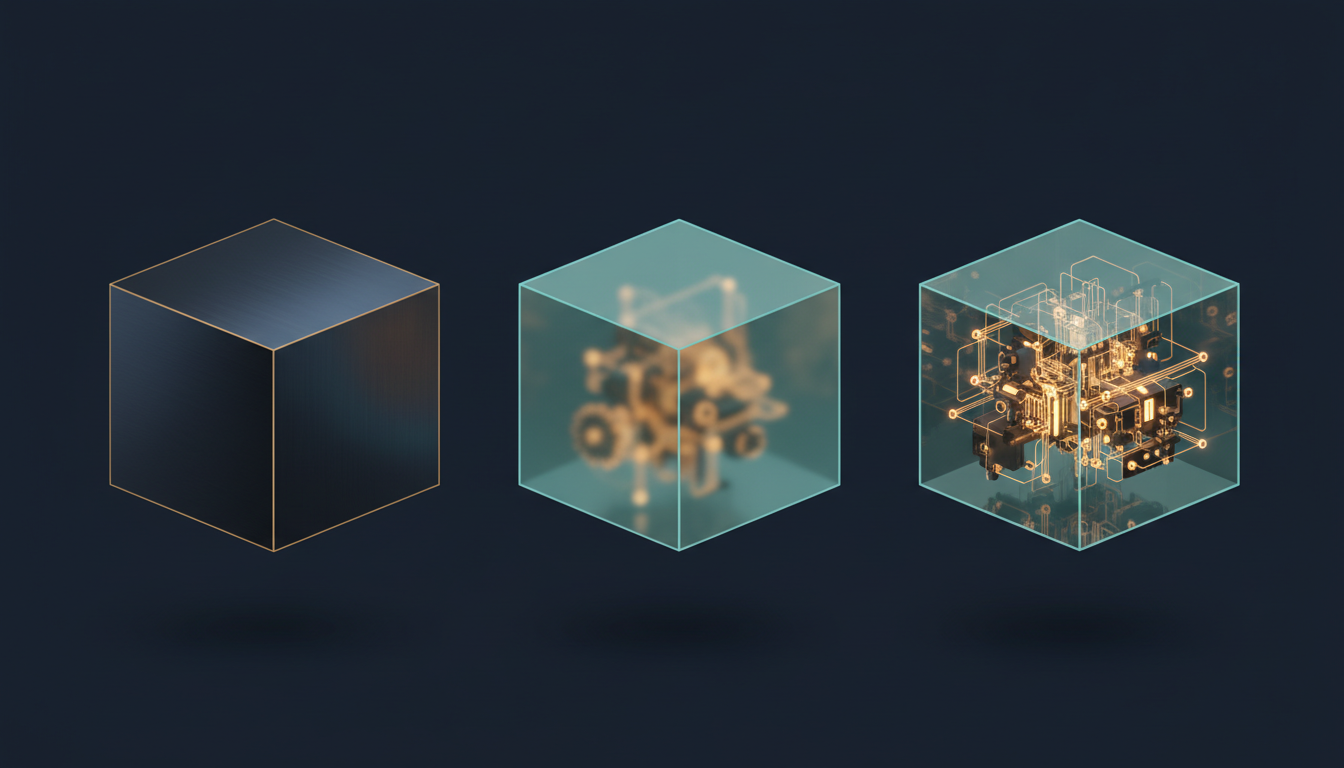
This week, Meta, Nvidia, and Switzerland’s Swiss AI Initiative all released “open” models within 48 hours of each other. Meta’s Muse Spark Open is an 816B-parameter model that runs on two Mac Studios. Nvidia’s Nemotron 3.5 Super VL is a 120B multimodal agent model with a permissive license. And Apertus 1.5 from Swiss AI is an 8B/70B family with 262K context that publishes everything: weights, data sources, training recipes, even intermediate checkpoints.
They all use the word “open.” They mean three different things by it. If you’re picking one to build on, that difference decides whether you can ship your product, pass a compliance audit, or reproduce the model at all. Here’s the taxonomy, and which tier your project actually needs.
Tier 1: Open weights (Meta Muse Spark Open)
Meta released the weights for Muse Spark Open on October 15 and called it “the most capable US open-weight model to date.” The numbers back the hype: 816B total parameters in a mixture-of-experts layout with 42B active, a 1M-token context window, and native multimodality. The headline trick is the hardware. It’s tuned to run on two Apple M5 Ultra Mac Studios using MLX, with the pair acting as one machine holding roughly a terabyte of unified memory.
The catch is the license. It’s the Muse Model License with “limited commercial terms,” not Apache 2.0. Free for many developers, but you need to read the fine print before shipping a product on it. You get the weights. You don’t get the data, the training recipe, or permission to do whatever you want commercially.
One demo is worth watching before you shrug this off as a bench-flex. The model shipped real iOS commits to Ice Cubes, an open-source Mastodon client, and drove DaVinci Resolve end to end, reviewing footage frame by frame to find the best moments and crop them vertically. All on-device, no cloud. That’s roughly $20K of hardware for a frontier-class model in a studio, not a data center.
Tier 2: Open weights + data + recipes (Nvidia Nemotron 3.5 Super VL)
Nvidia shipped Nemotron 3.5 Super VL the same day: 120B total parameters with only 12B active, a hybrid Mamba-Transformer backbone, and a 1M-token context window. Weights, datasets, and training recipes all ship under the OpenMDW license, which is permissive, more open than Meta’s offering on the license axis. Nvidia claims up to 5x throughput versus comparable open models on a single GPU, which fits the Mamba backbone’s reputation for cheap long-context inference.
It also comes with vendor-run benchmark wins over Claude Opus 5 and GPT-6.1 Sol on five specialized agentic tasks. Treat those with the usual skepticism. Vendor benchmarks are vendor benchmarks. But the price-performance story (12B active parameters, single-GPU friendly, permissive license) doesn’t need benchmark wins to matter.
Tier 3: Open everything (Swiss AI Apertus 1.5)
Then there’s Apertus 1.5, released October 15 by the Swiss AI Initiative. The 8B and 70B models won’t top frontier benchmarks. What they do top is disclosure:
- Weights under Apache 2.0 on Hugging Face
- Every data source listed in the apertus-data-transparency repo, with robots.txt opt-outs respected retroactively
- The SFT mix and preference pools downloadable
- All intermediate checkpoints (base, SFT, RLVR, DPO, SDPO)
- A technical report on arXiv (2610.15542) and even a published values charter
The specs are solid too: 262,144-token context (4x the previous generation), native image and audio input handled through the tokenizer. Images enter as discrete tokens via the Emu3.5 tokenizer, audio via WavTokenizer at 40 tokens per second, so the architecture stays unchanged and training runs at text-only speed. Training was continued pretraining of 4T added tokens on the 8B (19T total) and 2T on the 70B (17T total).
In a week where Meta open-weights an 816B model with a commercial-limited license and Nvidia ships a 120B under OpenMDW, Apertus is the “actually fully open” option. For anyone who needs to know exactly what went into a model, whether that’s research, public sector, or regulated industries, this is the most transparent family available.
Which tier do you actually need?
You’re prototyping or building an internal tool. Tier 1 is fine. Muse Spark Open on two Mac Studios gives you frontier-class capability with no API bill. Read the license once, confirm your use case falls inside the commercial terms, and move on.
You’re shipping a commercial product. Tier 2. OpenMDW’s permissive terms mean license risk is low, and Nemotron’s 12B active parameters keep inference cheap. Bring your own lawyer for the final call, but there’s less fine print than Meta’s.
You’re in a regulated industry, the public sector, or research. Tier 3, and really only Apertus. When an auditor asks what’s in the model, “the data sources are listed in a public repo and the checkpoints are downloadable” is a very different answer from “the weights are on Hugging Face.” Compliance teams care about the ingredient list, not the benchmark scores.
You need maximum capability regardless. Tier 1. The 816B model is simply bigger, and Meta claims it beats everything else US labs have open-sourced. Just budget for the license review.
What to do now
- Before adopting any “open” model this month, check the license file first and the benchmark table second. The license is where the surprises live.
- Match the tier to your use case using the framework above: prototype, product, or regulated.
- If transparency matters to your stakeholders, bookmark the apertus-data-transparency repo. It’s currently the best example of what full openness looks like in practice, and a useful yardstick to demand from other vendors.
“Open” has become a marketing word. The ingredient list is the real signal. This week, only one of the three releases printed it. Ask vendors for theirs, and treat any model whose data sources can’t be listed on one page with the skepticism that deserves.