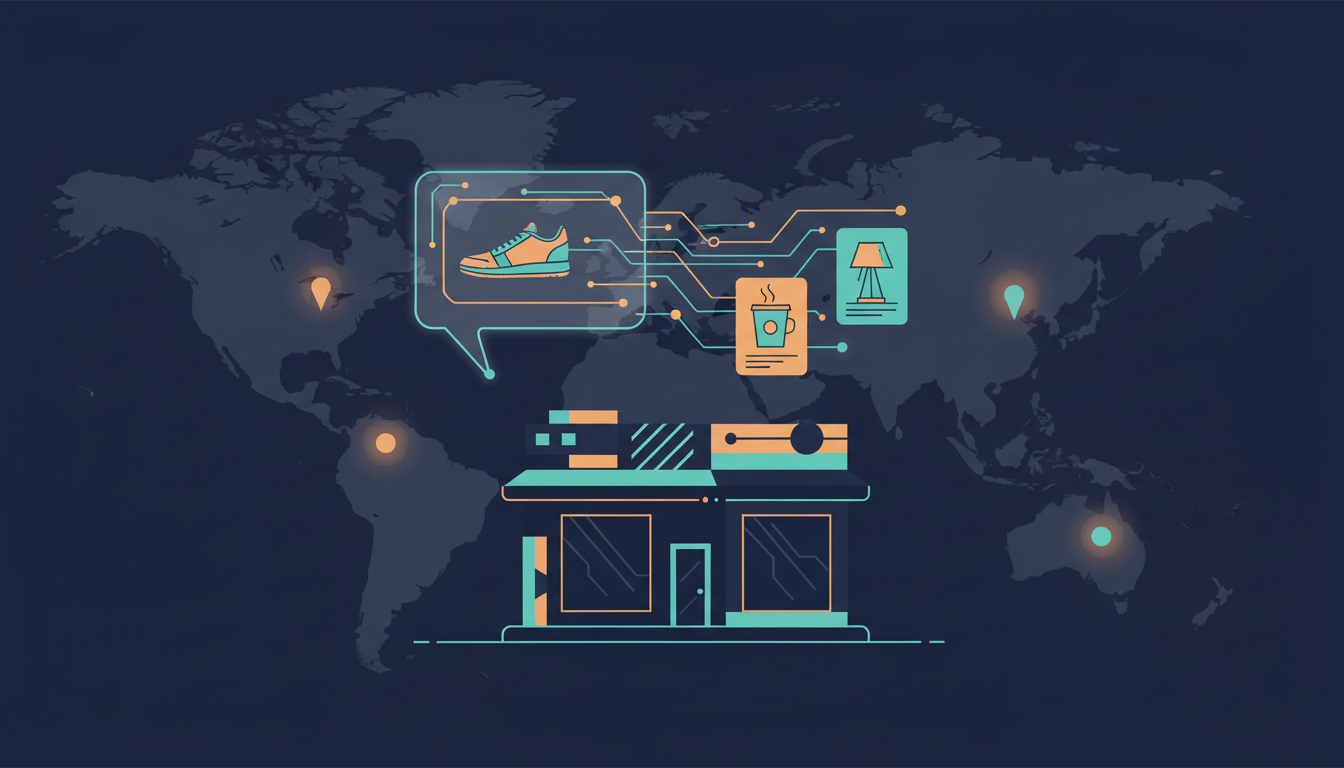
Sometime this month, a customer will ask ChatGPT to recommend a dentist near them, and the model will describe your practice. The question is whether it describes the one you run or the one it scraped from a stale directory in 2023.
That’s the stake in Businesses in ChatGPT, the beta OpenAI announced on November 10. It’s a business directory, a verified listing, and a storefront rolled into the app that OpenAI says reaches 1.2 billion people every week. And like every directory before it, from the Yellow Pages to Google Business Profile, the winners are the ones who show up early.
What shipped on November 10
Three pieces, none of them complicated.
The Business Hub is where a business claims its organization, corrects its details, uploads product catalogs with prices and availability, and reads aggregated insights: how often it gets mentioned, how many clicks those mentions earn, and “discovery topics,” meaning the themes running through conversations where the business comes up. OpenAI thresholds these numbers for privacy, so a shop with three mentions a month sees nothing.
The Shopify connection is already live. Merchants link their store from the Hub or from Shopify admin, and eligible products flow into ChatGPT through Shopify Catalog. If you run a Shopify store, this is the part you can finish in an afternoon.
Business Agents are the ambitious half. Eligible US ecommerce and online-service businesses can put an agent inside ChatGPT that answers customer questions on their behalf. A shopper comparing two products clicks through to the business profile and asks the agent which one fits their needs. OpenAI labels these conversations and keeps them separate from the model’s own answers, which is the right call, because the difference between “ChatGPT said” and “the merchant’s agent said” is the difference between an endorsement and an ad.
And it is an ad system. Businesses can sponsor their agent as a destination in ChatGPT Ads. The listing is free; the reach costs money.
If this looks familiar, it should
I’ve watched this movie twice. Google built a search engine, businesses realized rankings were survival, and a quarter century of SEO industry grew out of the panic. Then Google shipped Business Profiles and local search, and the companies that claimed their listings early ate the ones that waited.
ChatGPT is running the same play on a faster clock. Consider what a Business Hub listing controls. It feeds the model structured, verified facts: your hours, your services, your prices, your stock. Every unclaimed business leaves those facts to whatever the crawler found, which is why AI search audits keep finding models confidently describing closed restaurants with old menus.
There’s already a name for this work, GEO, and if you search this blog you’ll find we’ve been writing about it for months. What changed on November 10 is scale. A directory with 1.2 billion weekly readers stops being an experiment.
What you should do in the next week
First, claim your business in the Business Hub. This is the foundation; catalogs and insights sit on top of it, and an unclaimed listing can drift. If you operate in Indonesia or elsewhere in Southeast Asia, watch for regional rollout, but prepare the materials now, because the beta will expand and the verified early listings will hold an advantage the same way aged domains did in the SEO era.
Second, fix your structured data while you wait. Schema markup on your site, clean service descriptions, current pricing, accurate hours. Models read your site regardless of whether you’re in the Hub, so the site is the fallback source of truth. A weekend of cleanup changes what the model says about you.
Third, if you sell physical products, connect Shopify. Products already flow in through Catalog, which means inventory and pricing can stay current without manual uploads. If you’re on another platform, keep your product pages machine-readable and wait; the integrations will come.
Fourth, decide your agent policy before you need one. US ecommerce businesses can deploy a Business Agent today. Everyone else should draft answers to the ten questions customers actually ask, because that document becomes your agent’s training material the day eligibility opens. What’s your return policy, do you deliver to my area, which of these two products suits a beginner. Writing those down costs nothing and transfers to any platform.
Fifth, ignore the ads part until January. Sponsored agents are a landmine for small budgets, the auction is new, and nobody knows what a click is worth yet. Free presence is the whole game right now.
The catch
Two honest caveats. Business Agents are US-only at launch, so for most businesses reading this from Southeast Asia, the actionable parts are the claim, the catalog, and the structured data. That’s still most of the value.
The bigger one: you’re building on one company’s surface. OpenAI can change eligibility, pricing, or ranking rules whenever it likes, the same way Google spent twenty years rewriting search. Treat ChatGPT visibility like Google visibility: worth winning, never worth depending on alone. Your website, your email list, and your actual customers remain the assets you own.
The window
Directories reward speed. The businesses that claimed Google profiles in 2005 still benefit from the age and history of those listings. The Hub is two weeks old, most businesses haven’t noticed it exists, and the claiming is free. That combination doesn’t come around often.
Your future customers are already asking ChatGPT about the service you sell. Whether the answer comes from you or from a cached copy of the internet is, right now, still your choice.